Background
In the early part of the 20th century, discriminatory covenants barring the sale or lease of property based on race, ethnicity or religion were inserted in some property records as part of deeds, plats and covenants, conditions, and restrictions. Two decades after the landmark US Supreme Court case Shelley v. Kraemer established racially restrictive covenants were unenforceable under the 14th Amendment, the federal Fair Housing Act of 1968 made discriminatory covenants illegal and unenforceable.
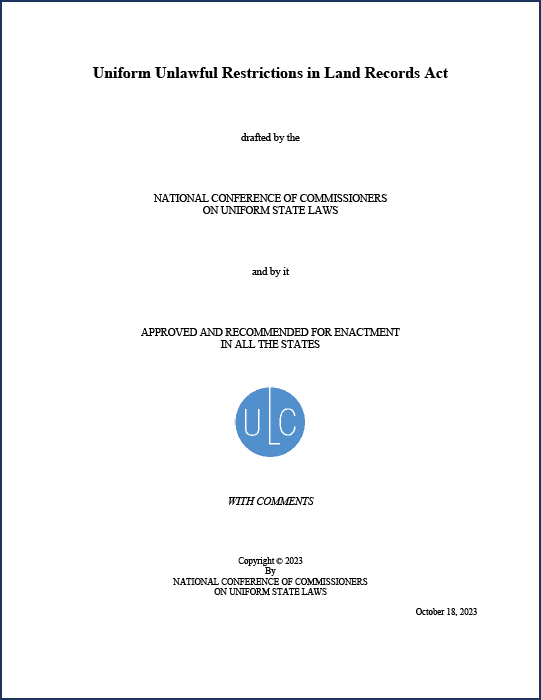
Previously, there was no current model law or uniform legislative approach to address previously recorded discriminatory covenants that still exist in public land records, which resulted in state lawmakers considering one or more legislative approaches to address illegal and unenforceable discriminatory covenants in public land records. As of late 2023, the Uniform Law Commission has finalized a model approach to address this issue. Please find the act under state legislative tools below.
ALTA Position
ALTA is strongly opposed to any form of housing discrimination and is committed to proactively working toward solutions that protect the property rights of all homeowners.
Federal Legislation
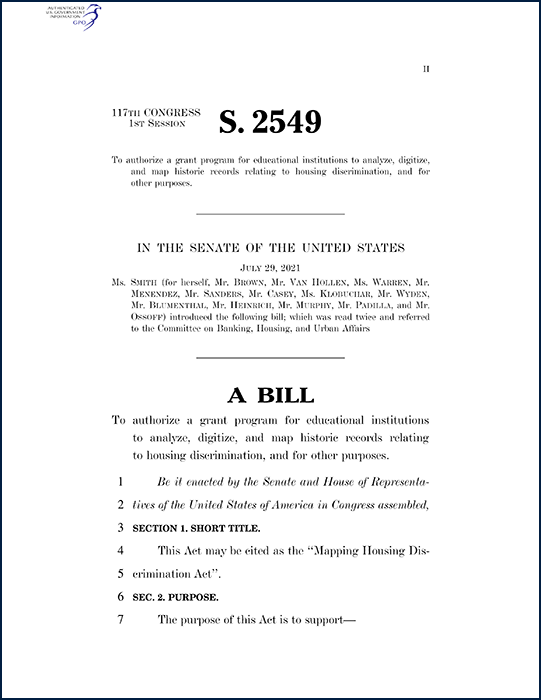
ALTA has endorsed federal legislation introduced by Senator Tina Smith (D-MN) to fund the research and study of discriminatory covenants in land records.
State Legislative Tools
Discriminatory Covenants Articles
Recent 2026 2025 2024 2023 2022 2021
ALTA Supports ULC’s Model Act for Discriminatory Covenants
The Uniform Law Commission's model act provides a mechanism for repudiation by homeowners of discriminatory covenants, while retaining the capability for universities and non-profits to study these historic records and their impact. Joining ALTA in support of the model act include Just Deeds, Mapping Prejudice, the Minnesota County Recorder’s Association, the Mortgage Bankers Association and the Property Records Industry Association.
New Oklahoma Law Removes Discriminatory Language From Property Covenants
People want to feel welcome where they live. However, one Edmond business owner didn’t always feel that way when he learned the historic rules of the land he bought.
Webinar Recording: Understanding the Painful Past of Discriminatory Covenants
Racial and discriminatory covenants can be found in the property records of American communities across the country. While no longer enforceable, the remnants of these discriminatory policies remain. Listen to this webinar recording to learn about the organizations tracking and mapping discriminatory covenants. Find out how the title and records industries can collaborate in identifying discriminatory covenants and help property owners address them.
Discrimination Seeps into Every Aspect of Homebuying for Black Americans
A Black loan applicant in the United States is more than twice as likely to be denied a home mortgage as a white applicant, aggravating the homeownership gap between Black and white Americans, according to a new report.
Scouring 84 million Pages of Santa Clara County Property Records for Historic Discrimination
A new state law requiring property records be scrubbed of racist covenants will cost the county hundreds of thousands of dollars. Supporters say it’s worth it.
Riverside County to Use First American Solution to Detect Discriminatory Covenants
The County of Riverside Assessor-County Clerk-Recorder’s office selected First American Data & Analytics CovenantGuard solution to help identify and redact unlawful discriminatory restrictive covenants in county recorded real estate documents.
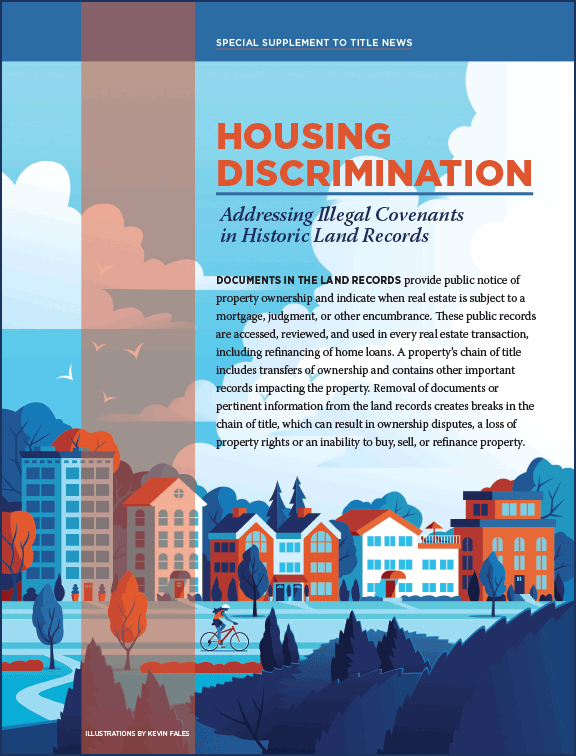
A Painful Past: ALTA Helps Find Solutions to Illegal Covenants in Public Records
Racially restrictive covenants are an unfortunate legacy of racism in America. Their use not only segregated our society, but also hindered minority families’ ability to access the greatest source of wealth in this country: homeownership. We know the Fair Housing Act made discriminatory covenants explicitly illegal, but they still exist in public records. Read on to learn about a federal bill that’s been introduced and what ALTA is doing to help find solutions.