Why This Matters
Real estate fraud includes schemes where criminals manipulate transactions, misrepresent ownership, use falsified documents or redirect funds during closing. Title and settlement professionals are frequent targets because they handle sensitive financial information, verify ownership and transfer funds. Preventing fraud requires secure processes, staff training, consumer awareness and clear communication throughout the transaction.
Types of Fraud in Real Estate
Deed and Mortgage Fraud
Deed and mortgage fraud involve forged documents, false information or unauthorized actions used to manipulate property ownership or financing. These schemes can create costly title defects and legal disputes.
Elder Abuse Fraud
Elder abuse fraud in real estate occurs when criminals exploit older property owners to gain access to their assets, often by manipulating, deceiving, or coercing them into transferring property rights or funds.
Seller Impersonation Fraud
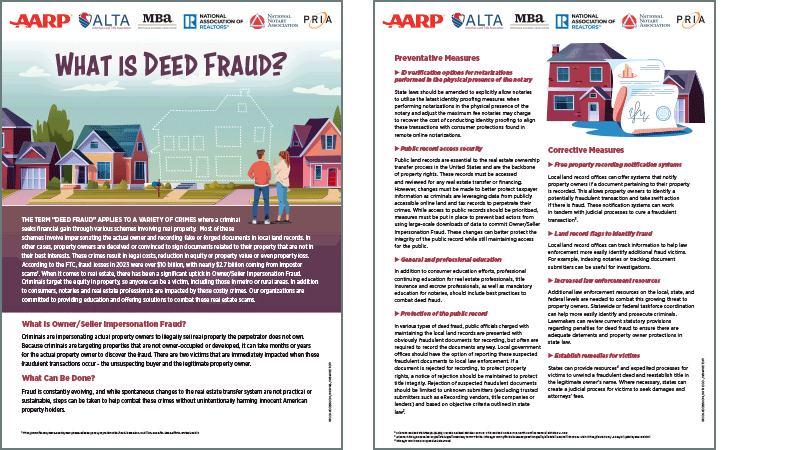
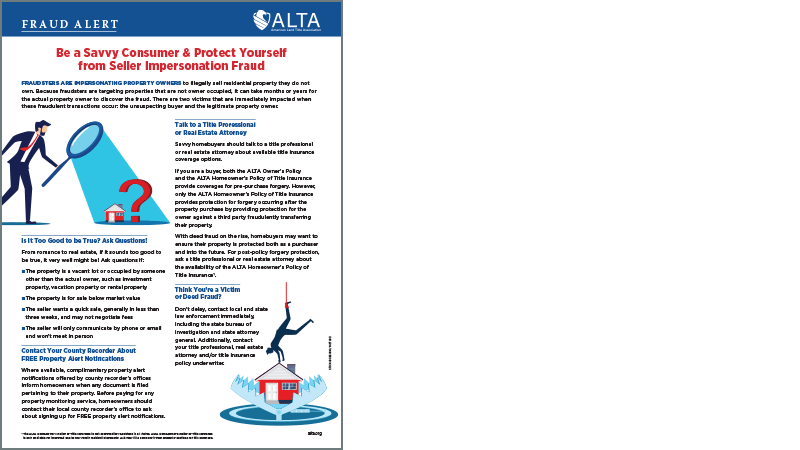
Seller impersonation fraud occurs when criminals pose as property owners to sell real estate they do not own, often targeting vacant land, second homes, or investment properties.
Wire Fraud
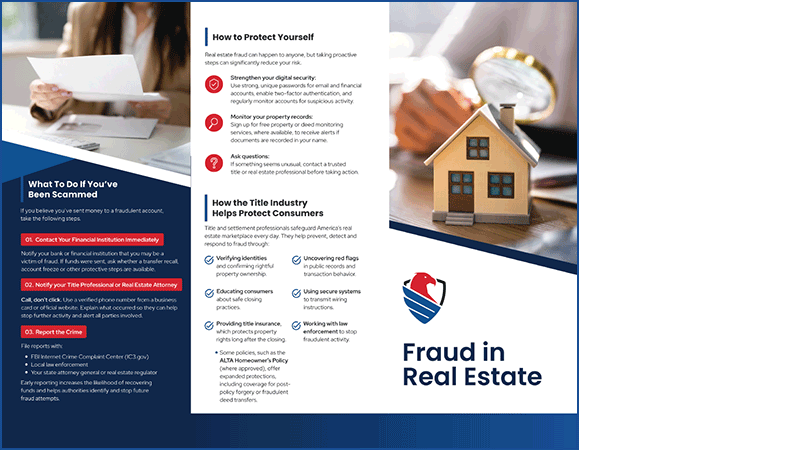
Wire fraud occurs when criminals use fake or compromised communications to redirect closing funds to unauthorized accounts. These schemes often target real estate transactions because large sums of money move during closing.
Featured Resources
 Video
Video
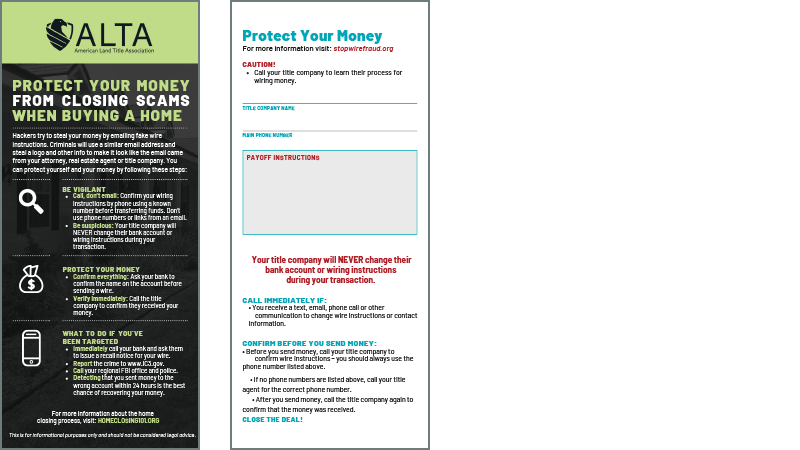
Protect Your Money from Wire Fraud Schemes When Buying a Home
Buying and selling a home is an exciting time, but there can be pitfalls for unsuspecting consumers . The American Land Title Association wants homeowners and sellers to be aware that criminals are using wire fraud schemes to steal money meant for home purchases or the proceeds from the sale of the property.
 Education Flyer
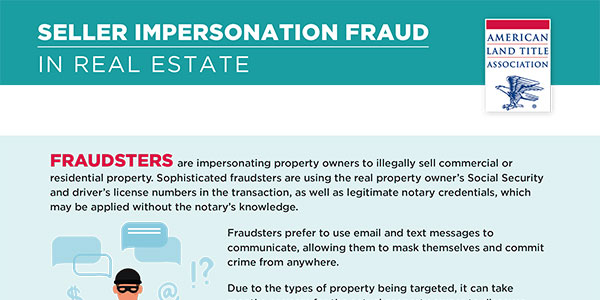
Seller Impersonation Fraud in Real Estate
Fraudsters are impersonating property owners to illegally sell property. Use this one flyer to educate REALTORS about the dangers of Seller Impersonation Fraud and how to spot fraud. Available in several languages.
 Video
Video
Red Flags to Spot Seller Impersonation Fraud
Fraudsters are impersonating property owners to sell commercial or residential property illegally. Sophisticated fraudsters are using the real property owner’s Social Security and driver’s license numbers in the transaction, as well as legitimate notary credentials, which may be applied without the notary’s knowledge.
Meetings & Education
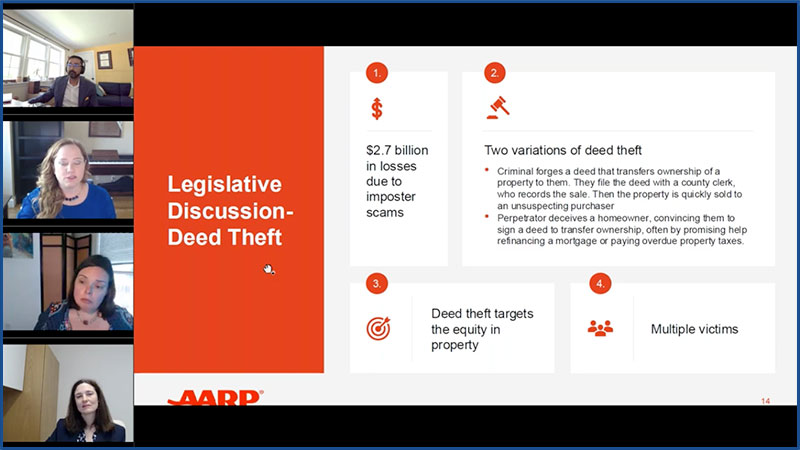
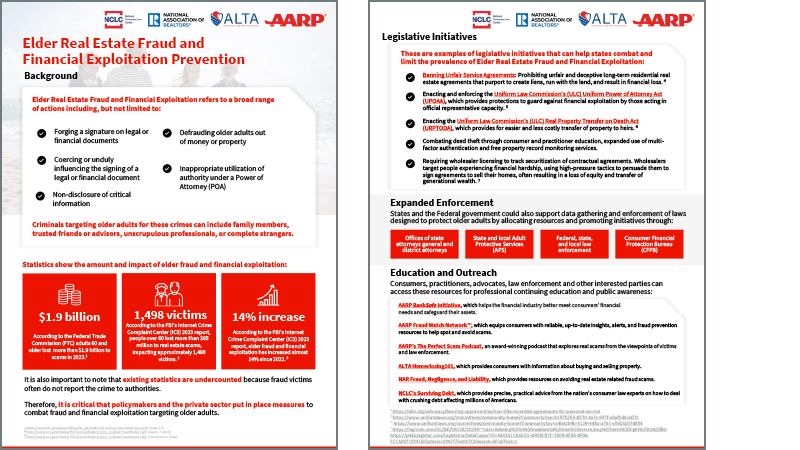
Learn How to Spot Elder Real Estate Fraud and Financial Exploitation
It’s always important for title and settlement agents to proceed cautiously when encountering irregularities or unusual situations at closing. Listen to this webinar to learn about the prevalence of elder fraud, red flags to be aware of, reporting options to law enforcement and potential legislation.

2024 State of Wire Fraud in the Title Industry
Reported losses from real estate wire fraud continue to climb, even as the industry adopts stronger wire verification practices. Listen to this webinar recording for insights from the latest FBI IC3 report and a closer look at how fraud is impacting the title industry and consumers.
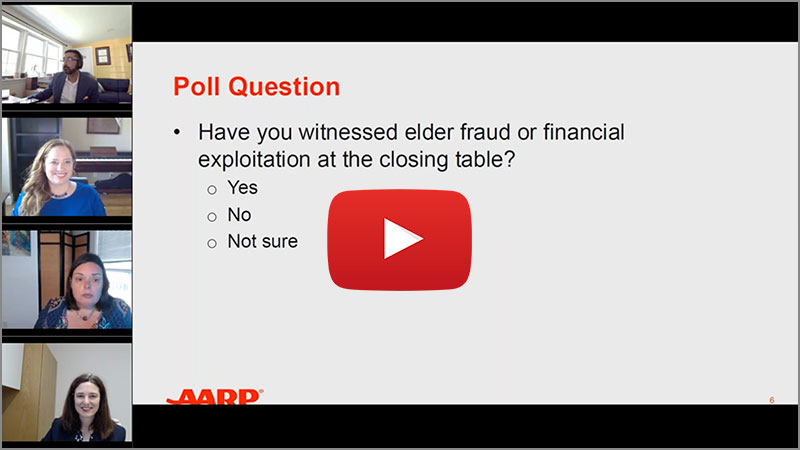
Learn How to Spot Elder Real Estate Fraud and Financial Exploitation
It’s always important for title and settlement agents to proceed cautiously when encountering irregularities or unusual situations at closing. Listen to this webinar to learn about the prevalence of elder fraud, red flags to be aware of, reporting options to law enforcement and potential legislation.
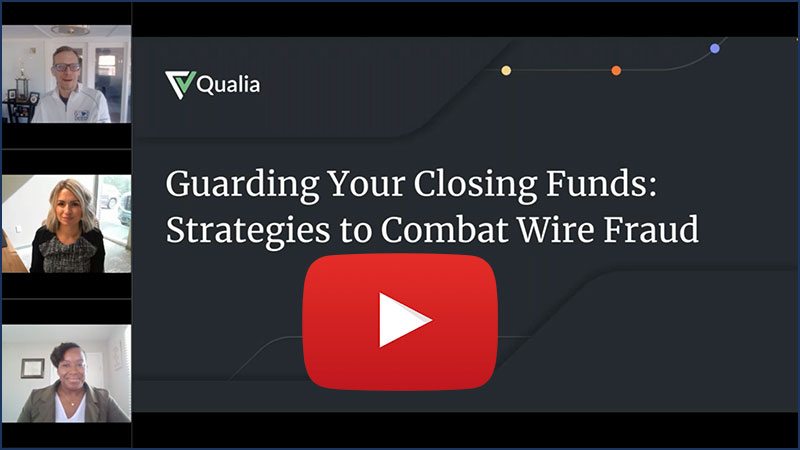
Guarding Your Closing Funds: Strategies to Combat Wire Fraud
Listen to this webinar recording as experts examine emerging fraudulent schemes, including the use of AI deepfake technology and seller impersonation, and provide essential strategies for companies to protect themselves and their clients.
Resources & Tools

Red Flags to Spot Seller Impersonation Fraud
Fraudsters are impersonating property owners to illegally sell commercial or residential property. Sophisticated fraudsters are using the real property owner’s Social Security and driver’s license numbers in the transaction, as well as legitimate notary credentials, which may be applied without the notary’s knowledge.

Protect Your Money from Wire Fraud Schemes When Buying a Home
Buying and selling a home is an exciting time, but there can be pitfalls for unsuspecting consumers . The American Land Title Association wants homeowners and sellers to be aware that criminals are using wire fraud schemes to steal money meant for home purchases or the proceeds from the sale of the property.
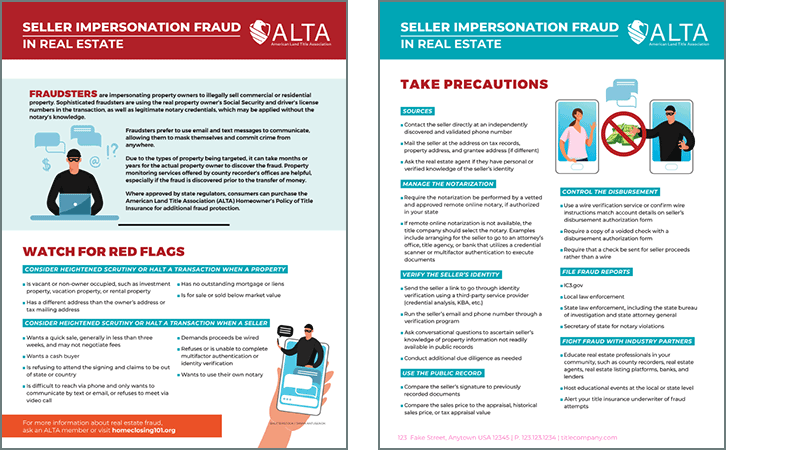
Seller Impersonation Fraud in Real Estate
Fraudsters are increasingly impersonating property owners to illegally sell real estate. Use this flyer to educate REALTORS® about the risks of seller impersonation fraud and how to recognize warning signs. The flyer can be customized for your business and is available in multiple languages.

5 Tips to Avoid Wire Fraud
When buying a home, be on alert for email or phone scams that will try to steal your money. Criminals can pose as your real estate agent, settlement agent or other trusted professional and provide false instructions for wiring mortgage closing funds. Watch this video for tips to avoid these scams.

News & Insights
The Great Transaction Heist: How Title Professionals Must Respond to Wire Fraud
Wire fraud in real estate is no longer the work of opportunistic scammers. It has evolved into a sophisticated, global enterprise. One that is faster, smarter and often better organized than many in the industry understand. That was the stark message delivered to more than 400 attendees during the ALTA EDge session, “The Great Transaction Heist: Inside Modern Wire Fraud,” experts pulled back the curtain on how modern fraud operations really work.
12 Real Estate Scams to Watch Out For
Reported losses in the U.S. from real-estate and wire-transfer fraud soared to $12.5 billion in 2023, according to the Internet Crime Complaint Center (IC3) of the Federal Bureau of Investigation (FBI). Navigating the real estate world can feel like trying to identify weeds in a new garden patch; some are obvious, while others look deceptively like the real deal. We are here to help you spot the poison ivy before you get a rash.
Strategies to Combat Wire Fraud
In 2012, former FBI Director Robert Mueller opined, “There are only two types of companies: those that have been hacked and those that will be.” That statement rings true 13 years later. Today, wire fraud remains one of the most pressing threats facing title and escrow companies. Fraudsters are becoming increasingly sophisticated, leveraging business email compromise, seller impersonation and even deepfake technology to infiltrate transactions. As the threats have escalated, the types of strategies criminals use to steal funds continue to evolve. This highlights the importance of continuous training, robust verification processes and industry collaboration to protect businesses and consumers from financial loss.
‘Everything at That Moment was Gone’: This West Virginia Couple Lost Their $255K Nest Egg in Real Estate Scam
After months of house-hunting, Raegan Bartlo and her husband finally found their dream home in a small West Virginia community just a few hours from Washington, D.C. But that dream became a nightmare as a few days before the closing, Bartlo received an email she thought was from her title company. The email provided instructions on how to wire the money for closing. She wired the $255,000 down payment as per the email’s directions.
Protecting Homeowners From Cybercriminals
Housing is a major driver of the U.S. economy. The industry sector contributes an estimated 18% of the national gross domestic product, or GDP, and the value of U.S. homes represents more than $50 trillion in household wealth in the form of home equity. Unfortunately, criminals have become adept at using technology to take advantage of unsuspecting consumers, writes ALTA CEO Diane Tomb and CertifID Executive Chairman Thomas Cronkright II.
Guarding Your Closing Funds: Strategies to Combat Wire Fraud
Listen to this webinar recording as experts examine emerging fraudulent schemes, including the use of AI deepfake technology and seller impersonation, and provide essential strategies for companies to protect themselves and their clients.
‘Everything at That Moment was Gone’: This West Virginia Couple Lost Their $255K Nest Egg, Life Savings in Real Estate Scam
After months of house-hunting, Raegan Bartlo and her husband finally found their dream home in a small West Virginia community just a few hours from Washington, D.C. But that dream became a nightmare as a few days before the closing, Bartlo received an email she thought was from her title company. The email provided instructions on how to wire the money for closing. She wired the $255,000 down payment as per the email’s directions.
First American Unveils Real-time Fraud Alert System
Available to all First American policy-issuing title agents, Order Insights is now included with AgentNet Services, the digital storefront for First American Title’s products and services that launched earlier this year.